Asia Transfer · Insights
Who pays? Why splitting the bill works differently in Asia
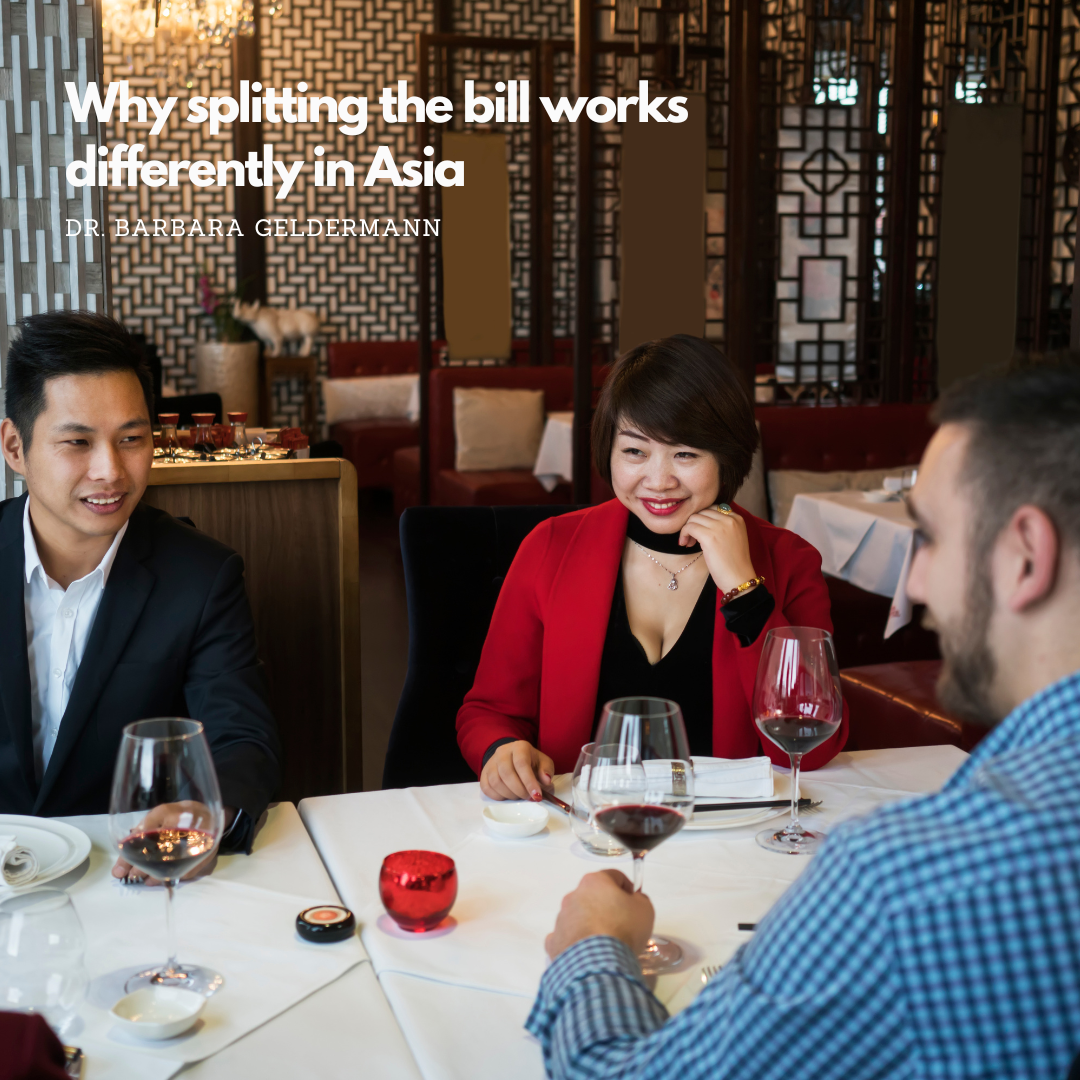
In Germany and several other European countries, eating out is usually straightforward: everyone pays for their own meal, often even with separate checks. In many parts of Asia, it works differently. Not because people there can’t do the math, but because a shared meal is seen less as a simple act of consumption and more as a gesture of relationship. The person who pays is sending a message.
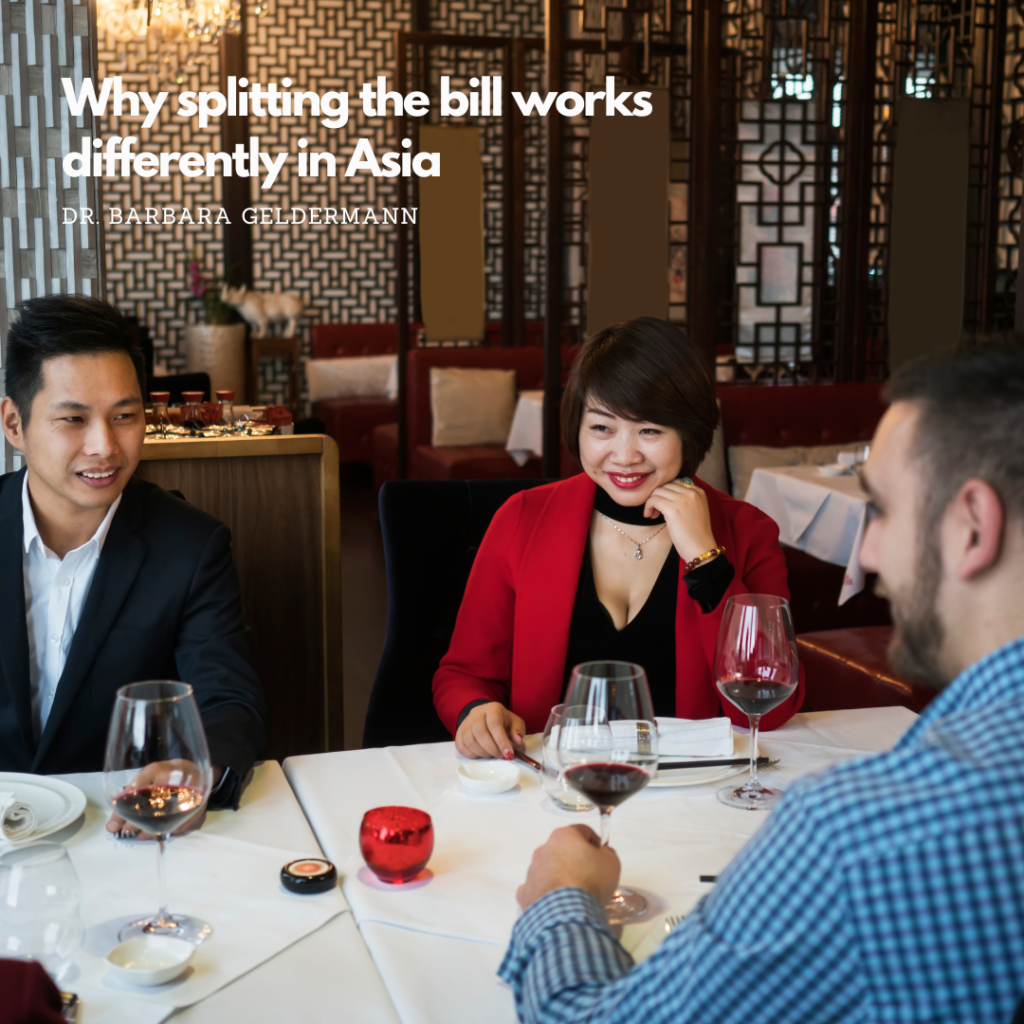
The essence is: a meal is about relationship, not just need. And the person who wants the relationship picks up the bill.
China: Eating as guanxi-building
In China it is very common for one person to pay the entire bill. Often it’s the host, the higher-ranking person, or the one who wants something (a deal, a favor, a positive atmosphere). Behind this is the logic of guanxi: relationships are built, maintained, and made visible. Paying is part of that.
“AA制” (AA zhi – “dutch treat”) does exist, but mainly among equals, younger people, or in very informal settings. As soon as hierarchy is involved, one person usually pays. Also very typical in China is the “bill performance”: someone offers to pay, the others refuse, the person insists again. That’s not theatre, it’s respect.
Japan: The one who invites pays – but discreetly
In Japan, paying is strongly tied to the relationship level. The higher-ranking person, the older person, or the host pays. The younger person offers, but often does not actually pay. The form matters: it’s handled discreetly, not at the table. Among peers there is “warikan” (splitting the bill) – but the bigger the hierarchy gap, the less likely that is.
In many traditional companies there is also an unspoken rule: the boss pays – and pays out of his own pocket. That, in turn, gives him the right to “lead” the evening: you go along, you stay until the end, and you drink along (nomikai culture). So the generosity buys a bit of social availability. Not going along signals distance. That’s why the invitation here is not just a nice gesture, but also a social framework.
Korea: Generosity is status
In South Korea, one person often pays the whole bill, and next time the other person pays – a rotating hosting system. It shows belonging and capability. “Dutch pay” exists among younger people, but someone who insists too much on paying only their own part can quickly look petty.
Southeast Asia: Invitation with pragmatism
In Thailand, Vietnam, or Indonesia, the rule is: the person who invites pays. In cities and among younger people, bills are split more often, especially if people meet frequently. Still, the expectation remains: a visible invitation is a social investment.
Singapore: The flexible version
Singapore is special because several practices coexist:
Multicultural: In Chinese-heavy groups, the host often pays.
Business: In formal settings, the host or the company usually pays – that’s part of being professional.
Everyday life: In hawker centres everyone pays for themselves because everyone buys from different stalls.
International: In mixed groups (Singaporeans + expats) splitting the bill is perfectly fine – as long as a clear invitation is not “neutralized.”
So in Singapore you have to pay more attention to the context than to nationality. Place, occasion, and who did the inviting are decisive.
Why is it like this?
- Saving face: Devaluing an invitation by insisting on splitting can feel like a rejection.
- Showing status: Paying is a friendly way of marking position.
- Building relationship: The person who pays creates a small, reciprocal obligation.
- Maintaining harmony: Meticulously splitting the bill turns a relationship moment into an accounting exercise.
A personal bridge solution
When I meet with a larger group – say ten people – one person pays the entire bill first. They take a photo of it, post it in the shared WhatsApp or WeChat group, and then everyone transfers their share to the person who paid. Sometimes you have to remind one or two people – but that’s fine. The important thing is the sequence: in the restaurant there was only one visible payment, i.e. one clear gesture. The actual settling-up happens quietly afterwards.
Why this works well
- At the table, harmony is preserved (Asian expectation).
- But in the end everyone still pays fairly (European expectation).
- No one loses face because the bill isn’t split publicly.
- Digital payment (WeChat, PayNow, Revolut, PayPal) makes settling-up easy.
What to avoid
- Splitting the bill loudly at the table (“But you had…”)
- Neutralizing an invitation (“No, let’s just split!”)
- Outbidding a higher-ranking or older person
- Asking for the bill too early, before it’s clear internally who is supposed to pay
Conclusion
Bills in Asia are rarely just bills. They are social communication. China, Japan, and Korea emphasize relationship more than fairness. Singapore can do both – the relationship gesture and international practicality. If you know that, you can, even as a European, use your own very up-to-date, digital version: make the relationship visible first, then settle the costs. That’s not only polite – it shows you’ve understood what’s really going on.