
Asia Transfer · Insights
At the Round Table – In China, Hierarchy Begins with Seating
It starts before the first dish is served. Before the tea is poured, before a single polite phrase is uttered. Chinese hierarchy reveals itself early—quietly, yet unmistakably: in the act of sitting down.
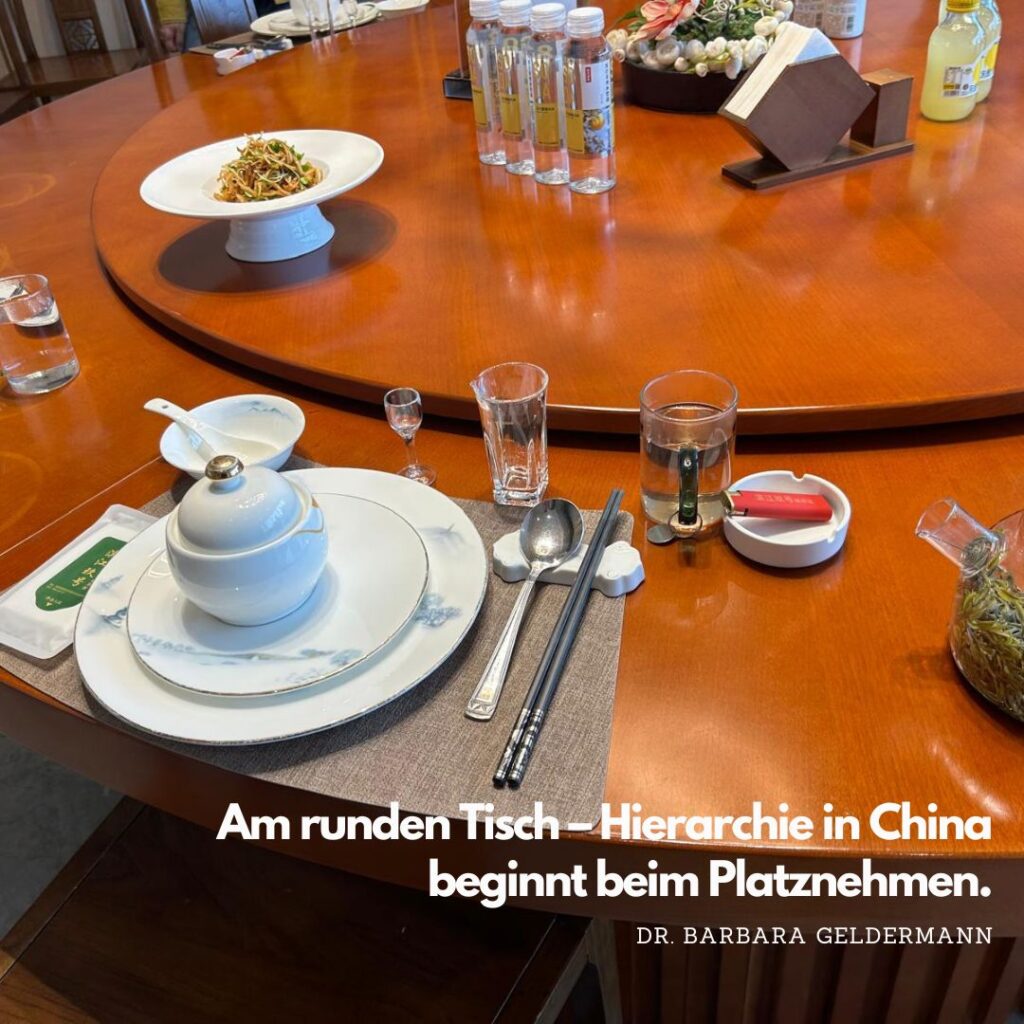
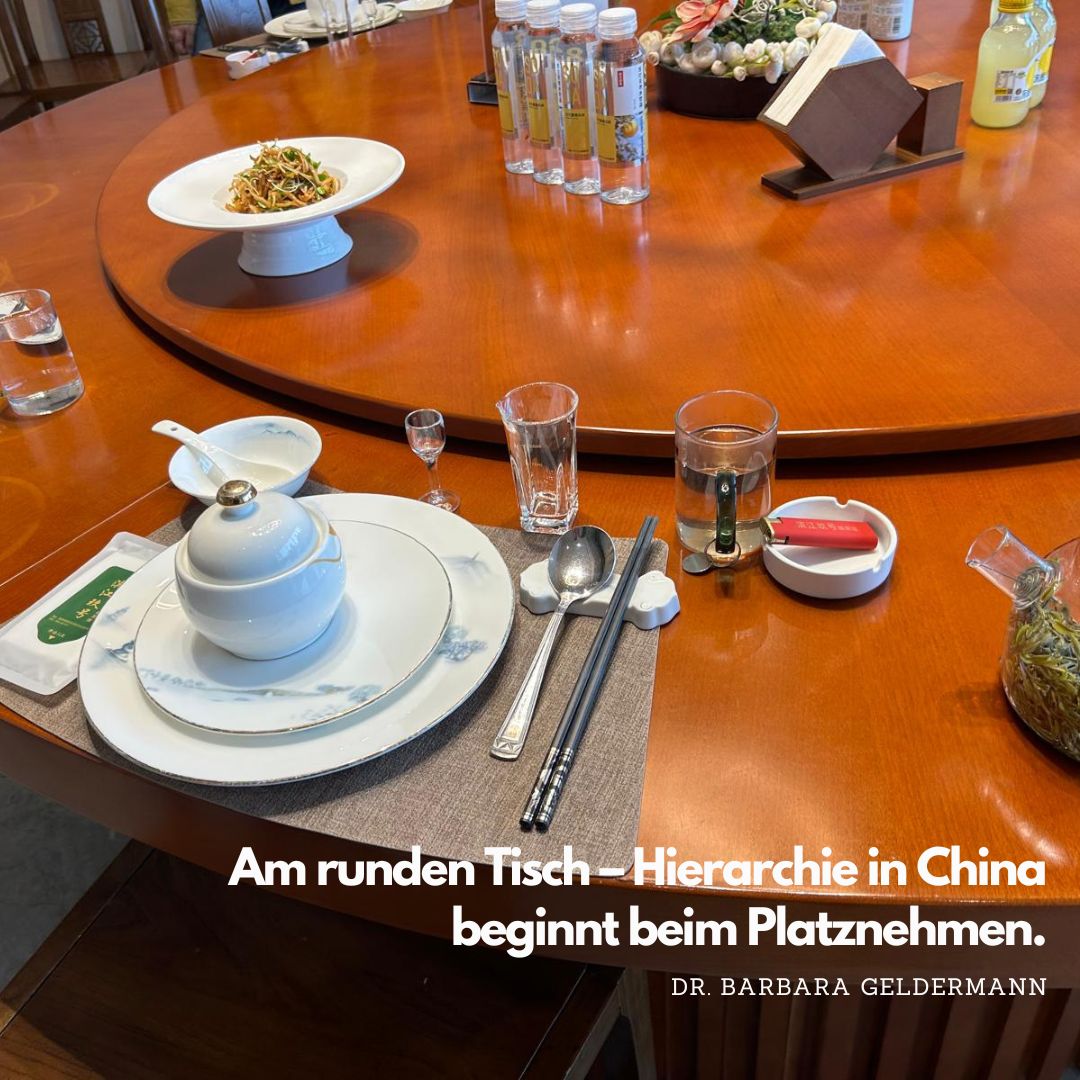
Because where you sit says a lot about where you stand. The seat with the best view, back to the wall and facing the door—that is the seat of honor. Directly opposite: the host. In between, everyone else is seated according to age, status, and responsibility. Sitting next to the host? Important. Sitting with your back to the door? Symbolically the least favorable position: exposed, vulnerable, far from the center of activity.
This is how seating speaks—without a word.
There’s a clear order when it comes to ordering food as well. The host decides what will be eaten. He may politely ask, “Do you like spicy food?” or “Is there anything you don’t eat?”—but the answer is diplomatically modest: “Please go ahead, I look forward to everything.” The act of choosing is an expression of responsibility. The host ensures not only flavor and balance, but also that everyone at the table can save face.
Even the sequence of dishes reflects the social fabric. Light, “cool” dishes come first, followed by warm, rich ones. Fish or shellfish often mark the climax of the meal. The final dish—often a soup—signals that the meal is coming to an end. You don’t just eat, you follow a dramaturgy.
And the chopsticks? Two sets are laid out. The red ones—for taking from the shared plates. The black ones—for eating your own portion. A small, quiet gesture of consideration and cleanliness. A sign of upbringing, of awareness for the collective and the individual.
At first glance, the round table may seem to symbolize equality—but hierarchy moves in circles, too. Not as a constraint, but as a structure, in which each person moves like in a dance: with attentiveness, with respect, with grace. And so, dining together in China is more than a moment of enjoyment. It is a ritual of relationships. A stage of social grammar. A mirror of all that remains unspoken—yet is clearly understood.